Under glass · 6 min read
Keeping a greenhouse frost-free without wasting electricity
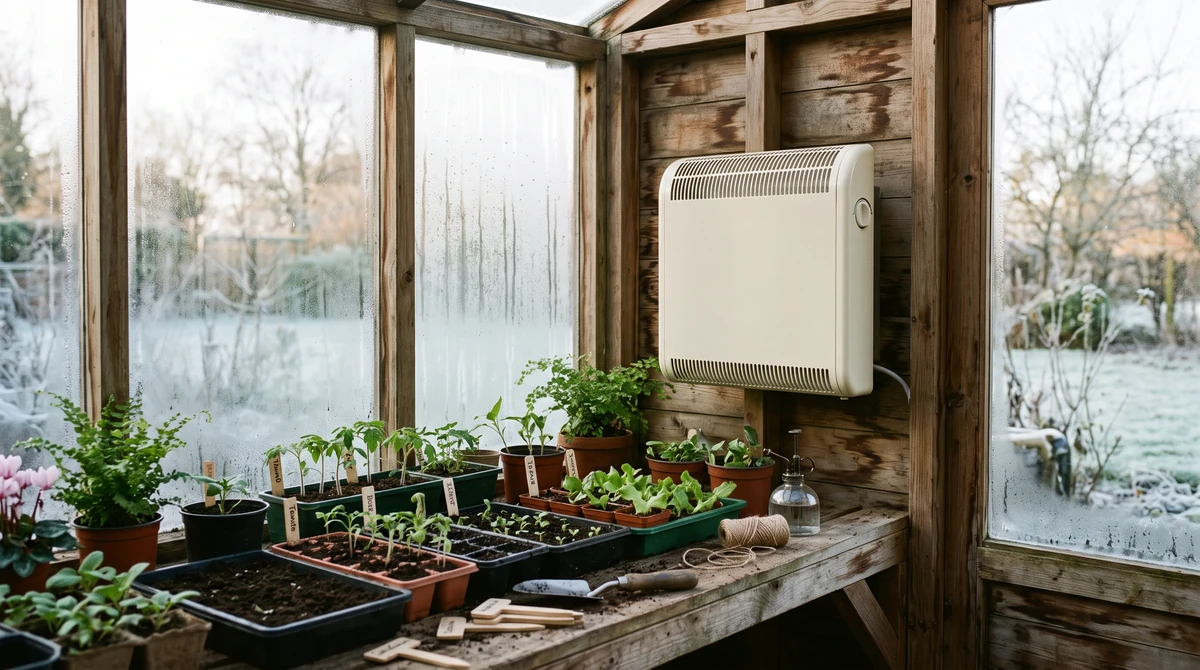
Frost-free is a far cheaper target than warm, and for overwintering it is usually all that is actually needed.
Decide what you are protecting
The cost gap between targets is enormous, and most people heat for a target they do not need:
| Target | Suits | Relative running cost |
|---|---|---|
| Frost-free, 2 - 5 °C | Overwintering dormant plants, tender perennials | Baseline |
| Cool, 7 - 10 °C | Early sowing, citrus | Roughly 2 - 3x |
| Warm, 15 °C + | Tropicals, propagation | 5x and upward |
For the overwhelming majority of gardeners, frost-free is the honest requirement.
Insulate before you heat
Heating an uninsulated greenhouse is pouring energy through glass. Do this first and the heater will run a fraction as often:
- Bubble insulation on the inside of the glass. Large-bubble sheet lets through more light than small-bubble.
- Seal the draughts. Gaps at the door, missing panes and unsealed vents lose more heat than the glass itself.
- Insulate the base. A surprising amount escapes through a bare concrete or soil floor.
- Partition it. Heat a curtained-off third rather than the whole structure. This is the single biggest saving available.
Choosing a heater
An electric convector with a built-in thermostat is the sensible default for a domestic greenhouse. It has no flame, produces no water vapour, and cycles on only when needed.
Paraffin heaters are cheap to buy and produce both moisture and fumes - moisture is exactly what encourages botrytis on plants already stressed by cold. Gas has the same drawback plus a ventilation requirement.
Size it roughly at 100 - 150 watts per cubic metre for frost protection in an insulated structure. Oversizing is not wasteful with a thermostat - a larger heater simply runs for shorter periods - but undersizing means it runs continuously and still loses the battle on the coldest night.
Placement
- Mount it where air can circulate freely, not tucked behind staging.
- Keep it clear of foliage and away from anything that can fall against it.
- Put the thermostat sensor, or a separate thermometer, at plant height - not up in the roof where it is several degrees warmer and will switch off too early.
The things that do the rest
- Ventilate on mild days. Still, damp air kills more overwintered plants than cold does.
- Water sparingly and in the morning. Wet compost overnight in the cold is an invitation to rot.
- Group plants together and lift pots off cold floors onto staging or polystyrene.
- Add thermal mass. Black water containers along the back wall absorb daytime warmth and release it slowly overnight, for nothing.