Lawn · 5 min read
Edging a lawn without scalping it
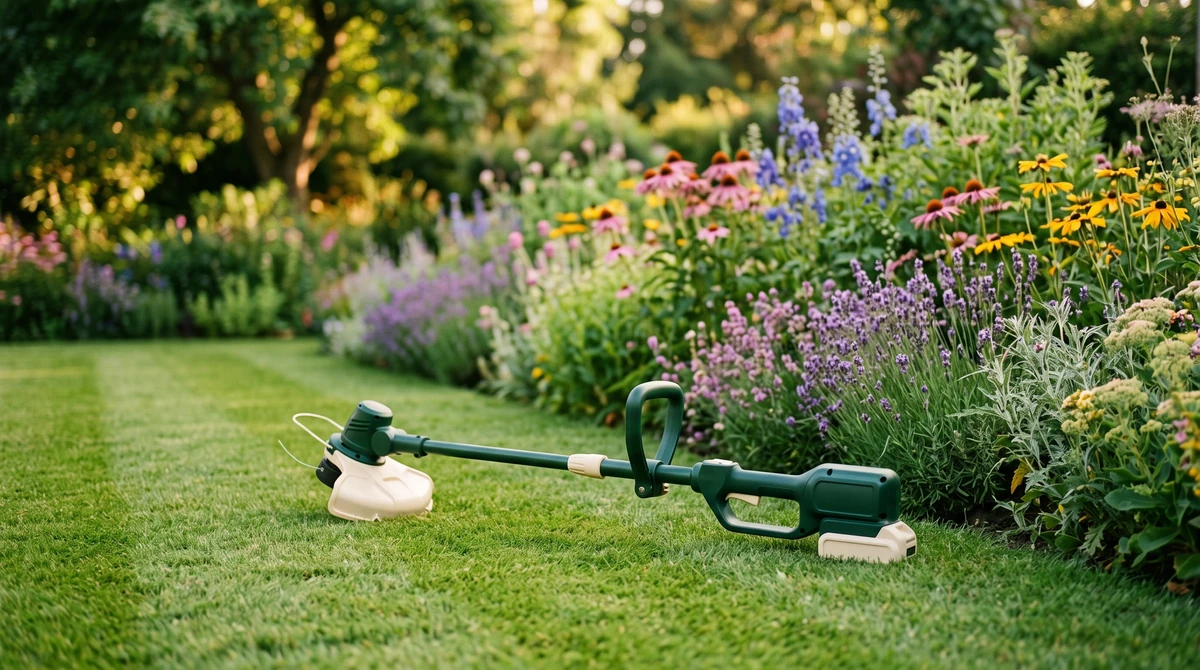
A crisp edge is the difference between a mown lawn and a kept one. It is also where most people take the grass down to soil.
Why edges get scalped
Scalping happens when the cutting head is held flat and dragged along the boundary. Ground is never truly level, so the head rises and falls, and every dip becomes a bald patch that takes weeks to recover.
The fix is a change of angle rather than a change of tool. Turn the head vertical, so the line cuts down the face of the edge instead of skimming across the top of it. Most trimmers rotate through ninety degrees for exactly this.
The order that works
- Mow first. Edging into long grass gives you no reference for height.
- Cut the vertical face. Head turned, line just clearing the hard surface, walking slowly backwards so you can see the line you have made.
- Tidy the top last, briefly, with the head flat and held high. This is a finishing pass, not a cutting one.
- Brush the clippings off the path while they are dry. Left to weather they stain stone.
Against a border rather than a path
Where lawn meets soil there is nothing to rest against and no hard reference. A trimmer here will throw soil and undercut the turf.
Use a half-moon edging iron once a season to cut the shape, then simply maintain that line with the trimmer held vertical. The iron does the shaping; the trimmer only keeps it honest.
Frequency beats effort
An edge cut every second mow takes two minutes. An edge cut twice a season takes an afternoon and looks ragged in between, because you are removing so much growth that the cut face is pale and shocked.
Small things that matter
- Wear eye protection. Vertical cutting throws grit and stone chips directly upward at face height. This is the one job where people are most often caught out.
- Mind tree bases and cables. Nylon line strips bark astonishingly quickly, and a ring of damaged bark around a young trunk can kill it. Leave a mulched circle rather than trimming right up.
- Do not edge in drought. Cutting the face of a dry edge exposes soil that then dries further and crumbles. Wait for damp ground.